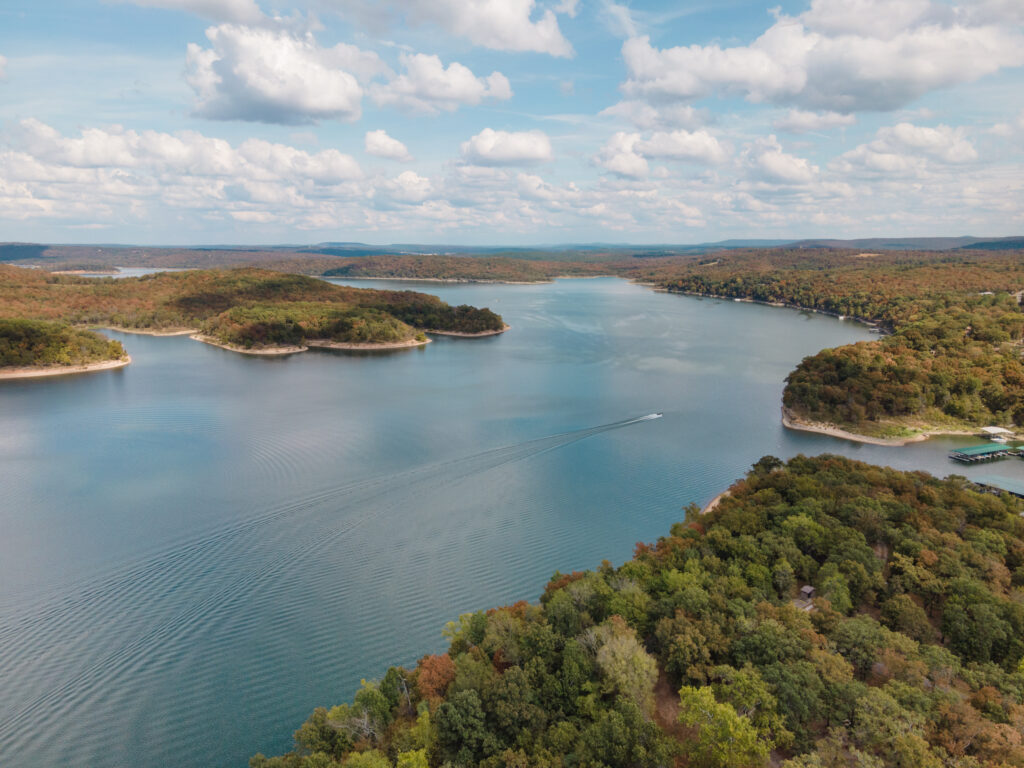
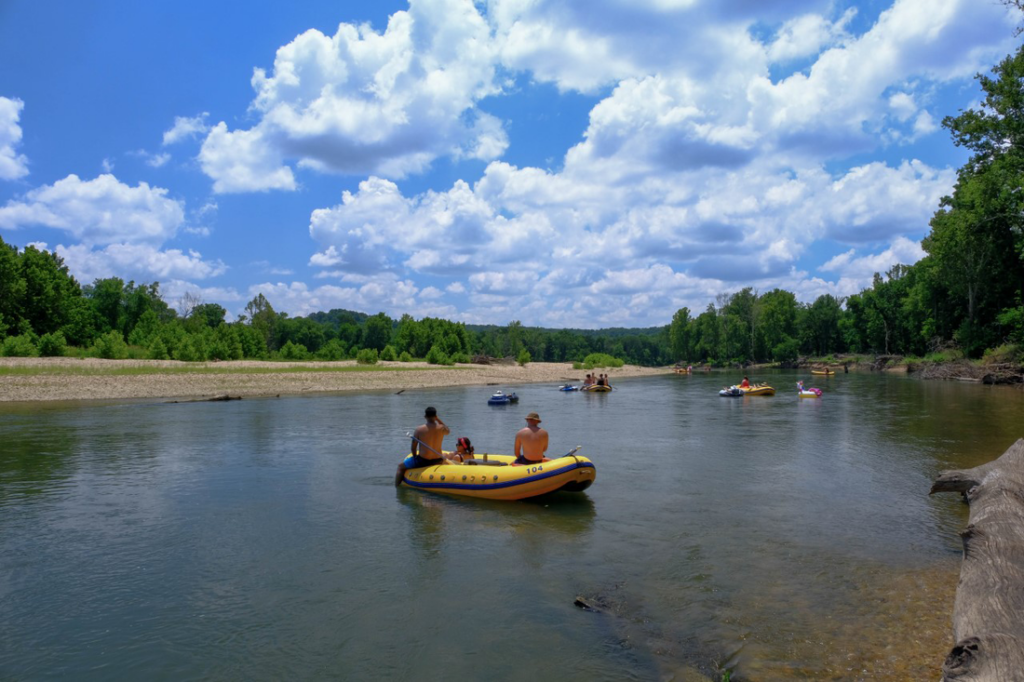
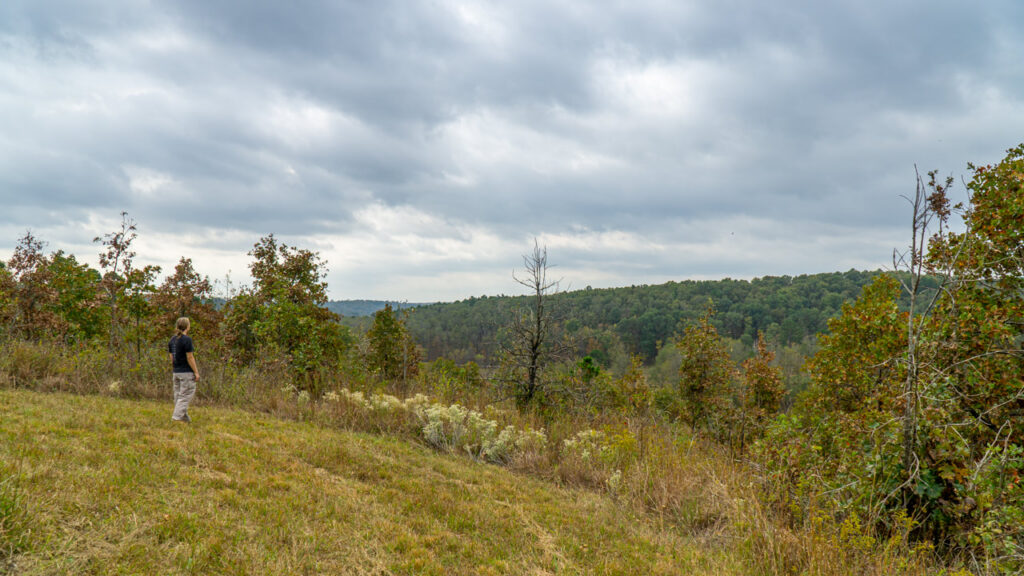
The Illinois River northeast of Tahlequah, in the Cookson Hills of northeastern Oklahoma, gets called beginner-friendly so often that the phrase has stopped meaning much. It is accurate most of the time. This is a Class I to II float that a first-timer can handle in an afternoon.
But beginner-friendly is not a permanent property of the river. Two things decide whether a given day out here is genuinely easy: how high the water is, and how far you signed up to paddle. Both are knowable before you leave the house.
If you plan to float the Illinois River in Oklahoma for the first time, those two variables matter more than which outfitter you pick. Here are the numbers, the reaches, the put-ins, and the rules.
River levels decide the difficulty, not the river
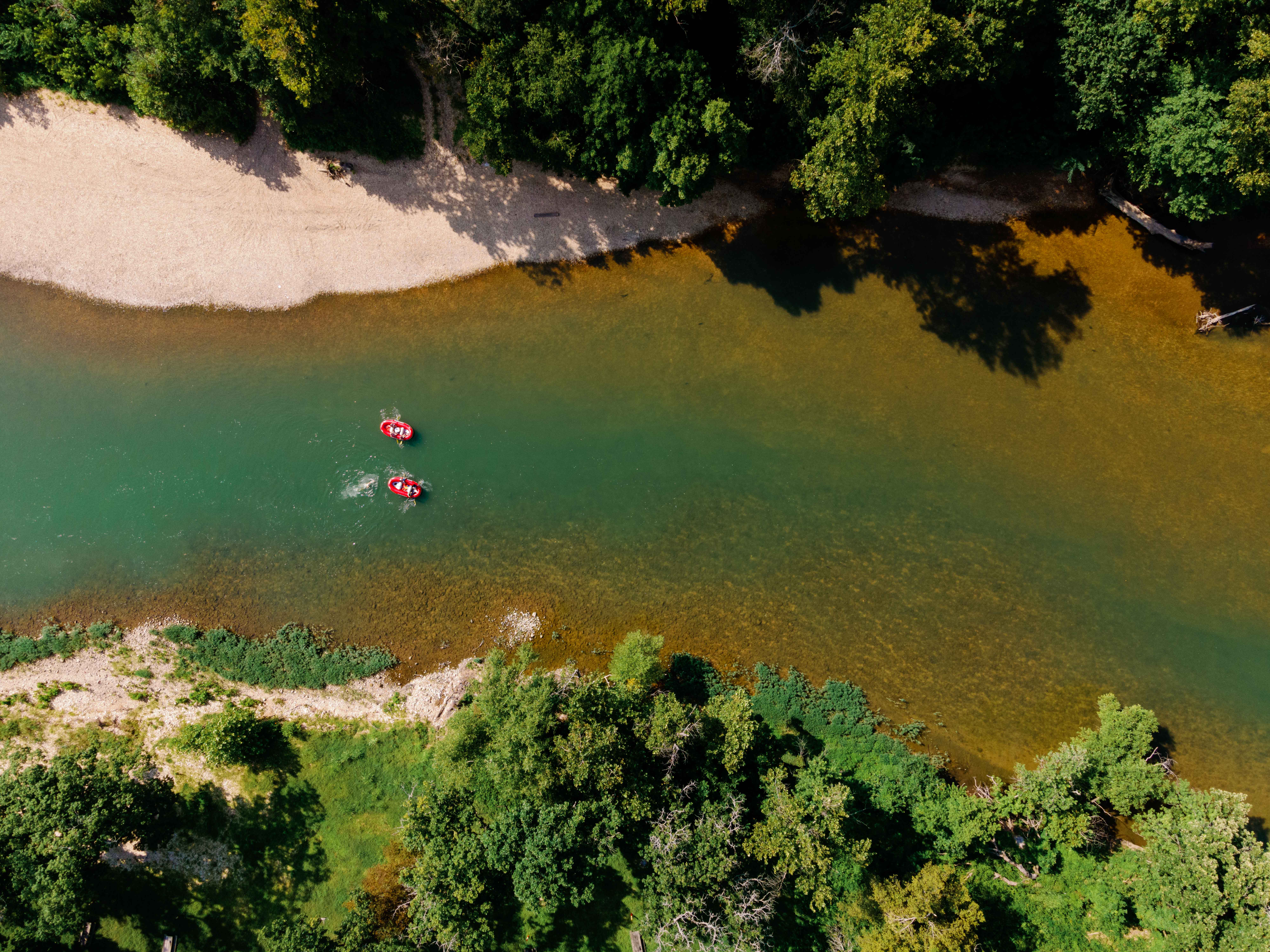
The stretch along Highway 10 in Cherokee County is rated Class I to II — gently flowing, moderate current, few hazards. That rating holds within a range of flow. Outside it, the river changes character.
The gauge to watch is the USGS gauge at Tahlequah, number 07196500. A third-party float guide puts the generally workable range for the Oklahoma reach at roughly 200 to 1,500 cubic feet per second. Treat that as a working range rather than an official standard — GRDA does not publish a CFS threshold.
Riverbend Floats publishes the clearest stage thresholds anyone on this river has put in writing, keyed to that same gauge. These are that outfitter’s own operating policy, not a GRDA regulation:
| Gauge reading | What Riverbend Floats does |
|---|---|
| 6 feet | Children 10 and under must float in rafts only |
| 6.5 feet | Rafts only, for all ages |
| 7.5 feet | All floating stops |
At 6.5 feet the river is no longer beginner water at all, and it can get there after one hard rain. A low river has its own problem: when it has not rained in a while, a long float turns into dragging your boat across gravel.
Check the gauge the morning you go, not the week before. If it reads high, call your outfitter before you drive — they make the final call.
Even in the good range, this is still moving water with strainers, undercuts and the occasional surprise hole. Life jackets on, every time.
How long should a first float be?
Ask experienced floaters what wrecks a first trip and none of them say the current. They say the twelve-mile.
The consensus is direct: six miles with frequent stops beats twelve. The twelve is a chore, and it gets sketchy as sunset approaches. The last couple of miles into the lower takeouts flatten into still water, which means paddling instead of drifting — the point where kids get hot, tired and frustrated.
Here is what the operators publish:
| Operator | Short trip | Long trip |
|---|---|---|
| Illinois River Outfitters | From Edmondson, about 2–4 hours, $24 weekday / $30 weekend | From Peavine, about 4–8 hours, $32 / $35 |
| Diamondhead Resort | From Edmondson/Combs Bridge, about 2–3 hours, $34 | From Peavine, 4–6 hours, $38 |
| Eagle Bluff Resort | Half-day raft, kayak or tube, $25 weekday | — no long trip listed |
| War Eagle Resort | 6-mile by raft, canoe or kayak | 12-mile |
| All American Floats | 4-mile, check-in from 11am | 9-mile all-day, or 14-mile kayak and canoe only |
For a first trip, take the short one. Nobody selling float trips will say that, because the long trip costs more. But a four-hour float with three gravel-bar stops is a better day than a seven-hour slog.
The reaches, upstream to downstream
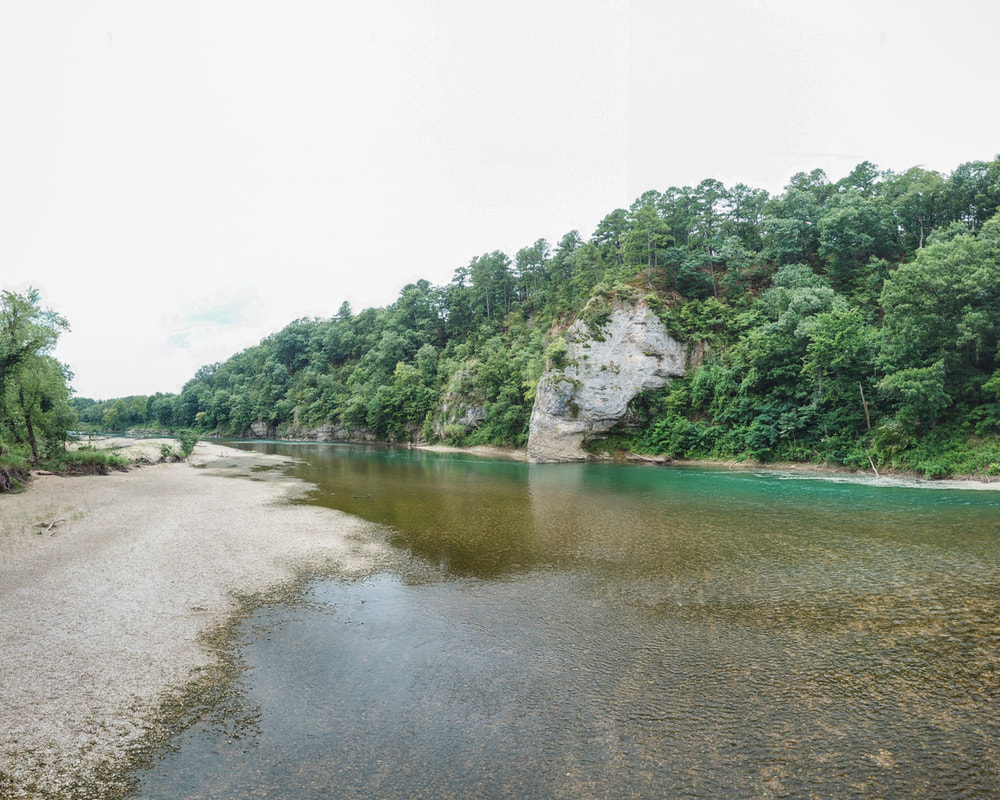
Knowing the reaches helps you compare what different operators are selling and judge whether the mileage matches the day you have.
WOKA (Watts) to Chewey Bridge — about 21.6 miles
The upper reach is described as wide, gentle family water. It is also an overnight run. At 21.6 miles it is not an afternoon, no matter how easy the water reads on a map.
Underestimating this distance is the most common beginner mistake on this section. Block a long single day at minimum, more comfortably an overnight with a camp stop, and start early so you are not paddling into dusk.
The put-in end carries its own rules. Woka Whitewater Park at mile 2.6 allows no alcohol and prohibits commercial use, and the Watts access area at mile 3.1 allows no alcohol either. Carnes Ford at mile 10.4 is marked dangerous during high water.
Chewey Bridge to Eagle Bluff Resort — about 13 miles
This is the classic Oklahoma day float. At roughly 13 miles it is long enough to feel like a real trip and short enough to finish in a day.
Launch from Chewey Bridge, mile 23.6, early enough to give yourself a margin. Illinois River Outfitters shuttles there for $50, by reservation.
Riverside Camp at mile 27.5 comes up shortly after launch and makes a useful early progress marker. You will also pass Hanging Rock Camp at mile 32.2, though confirm its 2026 status before counting on it as a stop. Round Hollow public access sits at mile 27.7 and Peavine at mile 32.4 — both GRDA access areas, both easy landmarks, and both allow beer and wine in original non-glass packaging for adults 21 and over.
Take out at Eagle Bluff Resort, mile 36.1. This is still a 13-mile day. If your group includes small children or nobody has paddled before, the shorter outfitter trips downstream are the better first outing.
Eagle Bluff Resort to Sparrow Hawk Camp — about 15.6 miles
At about 15.6 miles this is a long day or a lazy overnight. Decide which before you launch, because the two versions need different packing.
The advantage here is the density of commercial camps along Highway 10 at the upper end — Eagle Bluff at 36.1, Peyton’s Place at 36.8, War Eagle at 39.8, Illinois River Outfitters and Diamondhead both at 40.0. Bathrooms, gear and help are close by at the start.
This is also the busiest stretch on summer weekends. Stagger a large group rather than moving as one raft-up, and remember that tying vessels together is illegal.
One thing floaters report that no commercial page mentions: the last couple of miles into Sparrow Hawk Camp, at mile 52.2, flatten into still water. That means paddling, not drifting, at exactly the point when everyone is tired. Budget the energy for it, or pick a shorter takeout.
Shorter put-ins near the resort corridor — river miles 32 to 40
If you want to float without committing to a 13-mile day, this is the band of river to focus on. Between Peavine at mile 32.4 and Illinois River Outfitters and Diamondhead at mile 40.0 sit most of the outfitters, most of the lodging, and the shortest published trips.
Work with an outfitter along the corridor rather than planning your own logistics. They run the shuttle, which is the part that goes wrong when you improvise.
Pick your put-in by the time you actually have. Illinois River Outfitters runs its short trip from Edmondson at mile 36.2 in about two to four hours; Diamondhead runs its short trip from Edmondson/Combs Bridge in about two to three hours. Eagle Bluff sells a half-day float. War Eagle publishes a six-mile option.
Rentals cover the usual range — rafts, canoes, kayaks and, at some operators, tubes. Diamondhead offers rafts in 4-, 6- and 8-person setups plus single and tandem kayaks. Illinois River Outfitters uses 6-person rafts with a four-person minimum charge on weekends.
Confirm your takeout before you launch so shuttle timing matches your float speed, and ask about the cutoff. Diamondhead’s last launch is 2:00 p.m.; Illinois River Outfitters wants everyone off the water by 7:00 p.m.
Most of these operators also have lodging on the same property, which makes a two-day trip one phone call.
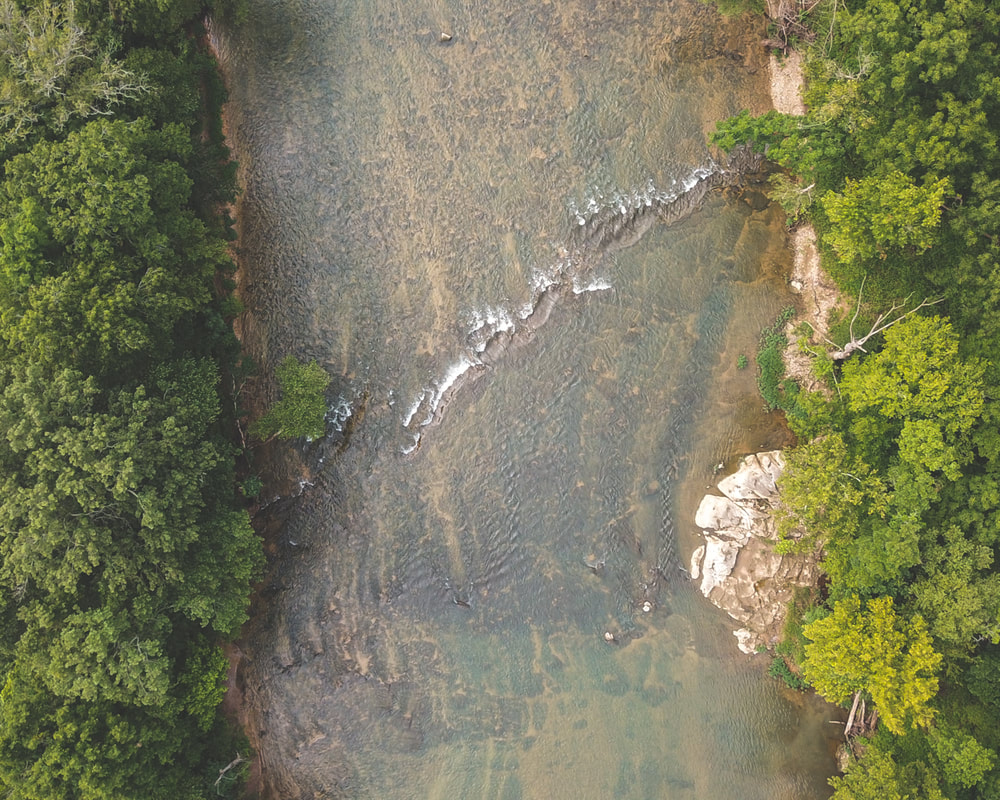
Where the river stops being beginner-friendly
Specific places, flagged by the sources themselves:
The put-ins, with river miles
Knowing the name of your put-in helps you compare trips between operators.
| Access area | River mile | Alcohol | Notes |
|---|---|---|---|
| Watts | 3.1 | No | |
| Carnes Ford | 10.4 | — not listed | Dangerous in high water |
| Chewey Bridge | 23.6 | — not listed | IRO shuttle $50, reservation required |
| Round Hollow | 27.7 | Yes | Long-trip launch for private boats; IRO shuttle $35 |
| Stunkard | 28.0 | — not listed | |
| Peavine | 32.4 | Yes | The long-trip start; IRO shuttle $25 |
| Edmondson | 36.2 | Yes | The short-trip start; IRO shuttle $20 |
| New Combs Bridge | 36.5 | — not listed | Paired with Edmondson by Diamondhead |
| No Head Hollow | 41.5 | Yes | |
| Todd | 47.0 | No | Commercial use prohibited |
| Echota | 53.2 | — not listed | |
| US Hwy 62 Bridge | 55.1 | No | |
| Murrell Home Rd. | 62.0 | — not listed | Dangerous in high water |
Can you bring your own boat?
Yes, and it is cheaper than renting.
You need a GRDA private float permit: $1 per vessel per day, or a $10 annual decal good January through December, affixed to the front right of the vessel. It is sold at the GRDA Scenic Rivers office at 15971 OK 10 in Tahlequah, at several float operations, or from a GRDA camp host.
Private vessels launch at Peavine or Round Hollow. Peyton’s Place is the operator floaters consistently name as allowing your own equipment without an upcharge at their ramp.
If you are camping the night before, note that reservations work differently by property. The GRDA public access areas are first come, first served, while the private camps take bookings. On a June or July weekend, reserve.
Two 2026 changes: All American Floats is not shuttling private equipment this season, and is not selling the $1 wristbands.
The rules that generate the tickets
Enforcement here is real, and almost nobody publishes the rules. Floaters describe coolers inspected at the bus door before they reached their rafts, a couple ticketed a few hundred dollars over a bag of Kool-Aid and vodka, and jello shots written up as a liquor violation. Anything out of its original container can be enough.
All of it is avoidable:
Free trash bags are available at the GRDA Scenic Rivers office, and Riverbend provides life jackets at no cost to anyone who arrives without one.
Age and gear rules, and what else is on site
These differ property to property and they are worth checking before you book.
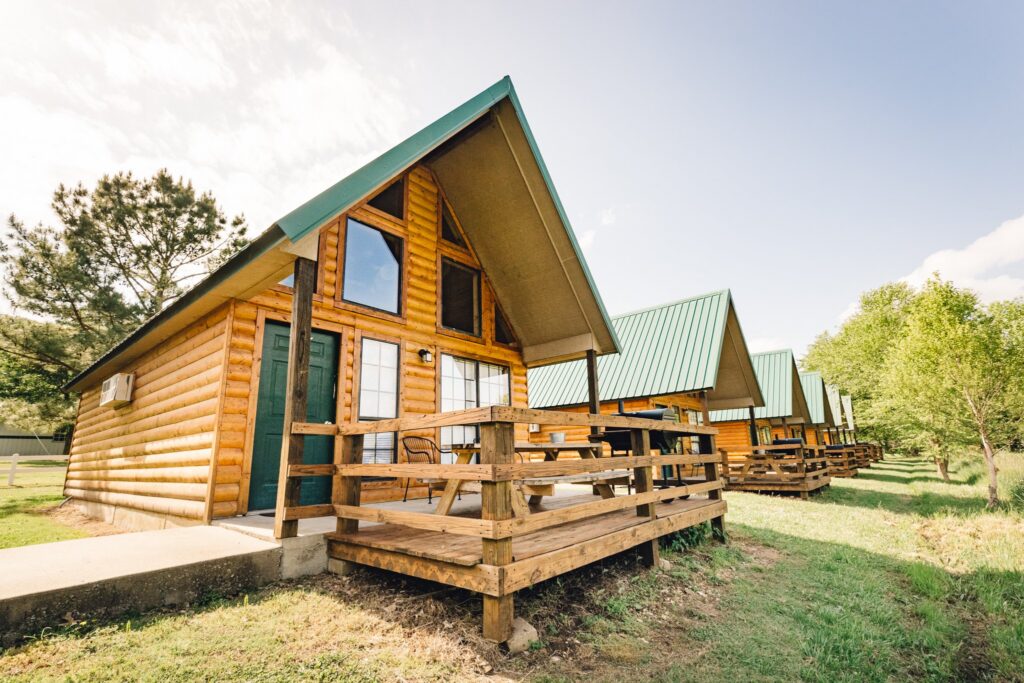
If you are staying the night, most of these operators have lodging on the same property, which makes a two-day trip a single phone call. War Eagle has two-bedroom A-frame cabins plus a motel and bunkhouses; Eagle Bluff and Peyton’s Place both have 50-amp RV sites; Illinois River Outfitters has one cabin and full-service RV hookups. Several camps have hot showers, which matters more than you would think after a day on the water. Diamondhead has disc golf, horseshoe pits and lighted courts, and All American Floats added sand volleyball and horseshoe pits for 2026.
Logistics to pay attention to
One conflict worth knowing: the state tourism office says Eagle Bluff can arrange overnight floats, while Diamondhead prohibits them outright. Overnight floating is operator-specific, not a river-wide option. Ask.
If you want a cabin at the put-in, the full cabin directory by river mile lists every riverfront property in downstream order. To weigh a cabin against a campsite, see camping and cabin costs compared.
Two things the outfitters won’t tell you
Do not drive home impaired. This is the strongest sentiment among experienced floaters here, stated far more bluntly than we will. GRDA’s own guidance says don’t paddle under the influence. The drive back down Highway 10 matters more.
Cell service is unreliable — on and off at best, and texting sometimes works when data does not. Download your playlist and your directions before you leave.
Frequently asked questions
Generally yes, at normal levels, in a raft, with a life jacket — required by law for children 12 and under. Most serious incidents here involve alcohol, diving into shallow water, or floating right after heavy rain. Check the gauge, take the short float your first time, and keep jackets on.
Check the USGS gauge at Tahlequah before you drive. Riverbend Floats stops all floating at 7.5 feet, and roughly 200 to 1,500 cubic feet per second is generally workable water. Outfitters make the final call each morning, so phone ahead if it has rained.
Short trips run about 2 to 4 hours, long trips 4 to 8. Add time for gravel-bar stops, which is the point of gravel-bar stops.
Published rates run about $20 to $38 per person. Diamondhead charges $20 on weekdays; Illinois River Outfitters runs $24 to $35 depending on trip and day; Eagle Bluff lists $25 for a weekday half-day.
For the short float at normal levels, no. The current does most of the work. The long float involves real paddling, especially in the flatter lower stretches.
Outfitters cancel. Call the morning of. Riverbend Floats stops floating at 7.5 feet on the Tahlequah gauge.
At most of the private camps, yes. The GRDA public access areas are primitive — vault toilets, no showers. Ask when you book.
Memorial Day to Labor Day is the busy stretch. All American Floats runs daily May 1 to September 7, then weekends through September 27. Some operators run year-round with notice.
Rules and rates current as of September 2026. GRDA is the authority on Scenic Rivers regulations.
Explore the Award-winning Visitor Guide

Tahlequah and Cherokee County's official Redbud Award-winning visitor guide packs three days of hikes, floats, rides, and fish into one download. Trip ideas, mileage, and outfitter contacts, ready before you leave home.