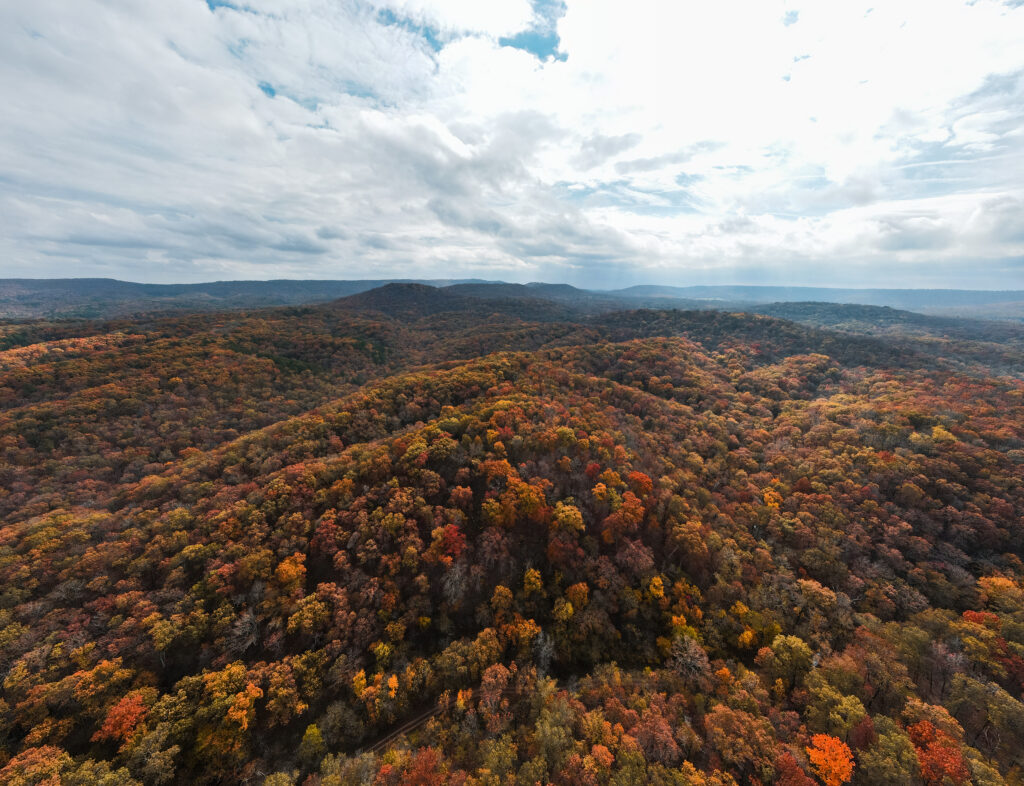
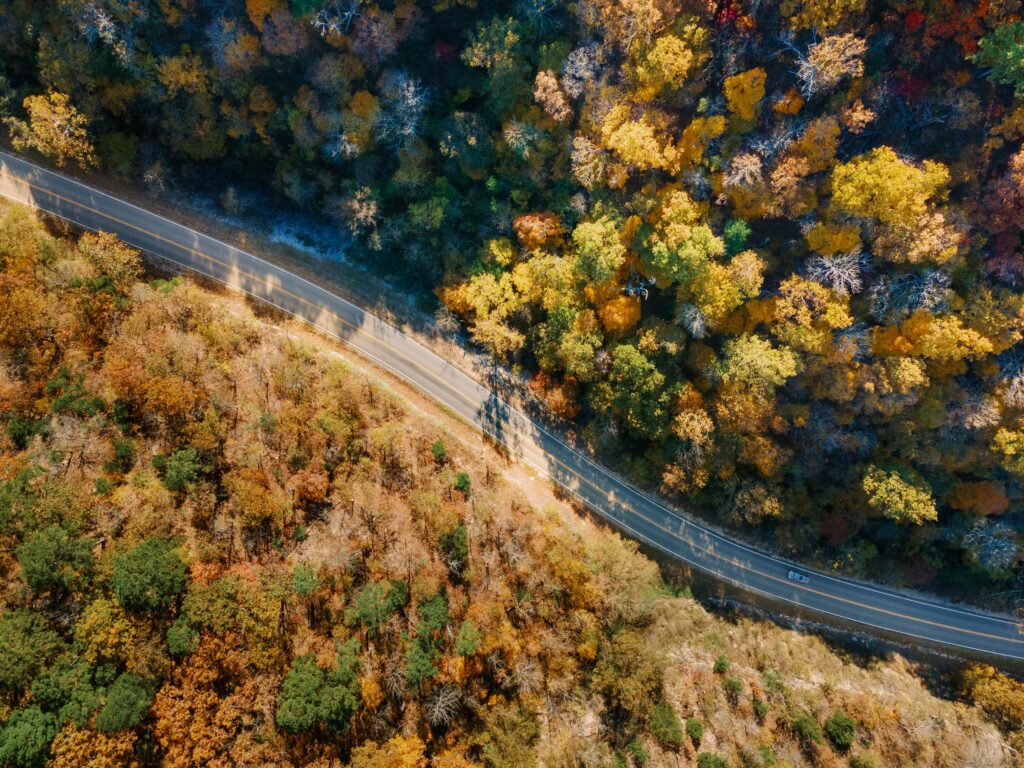
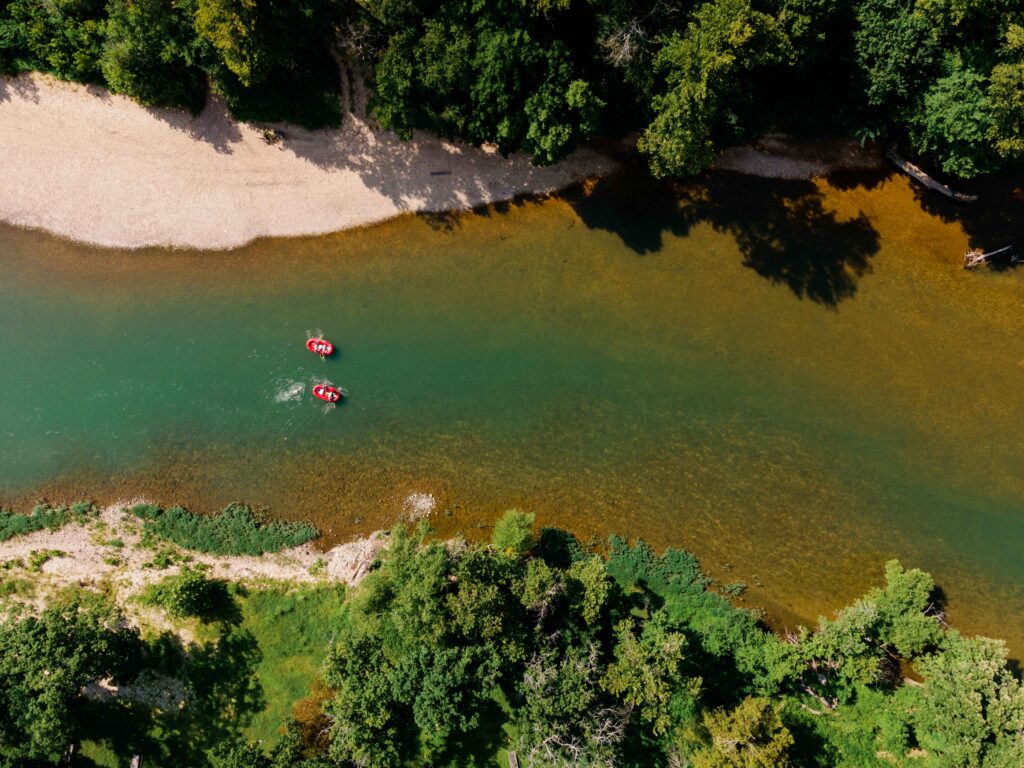
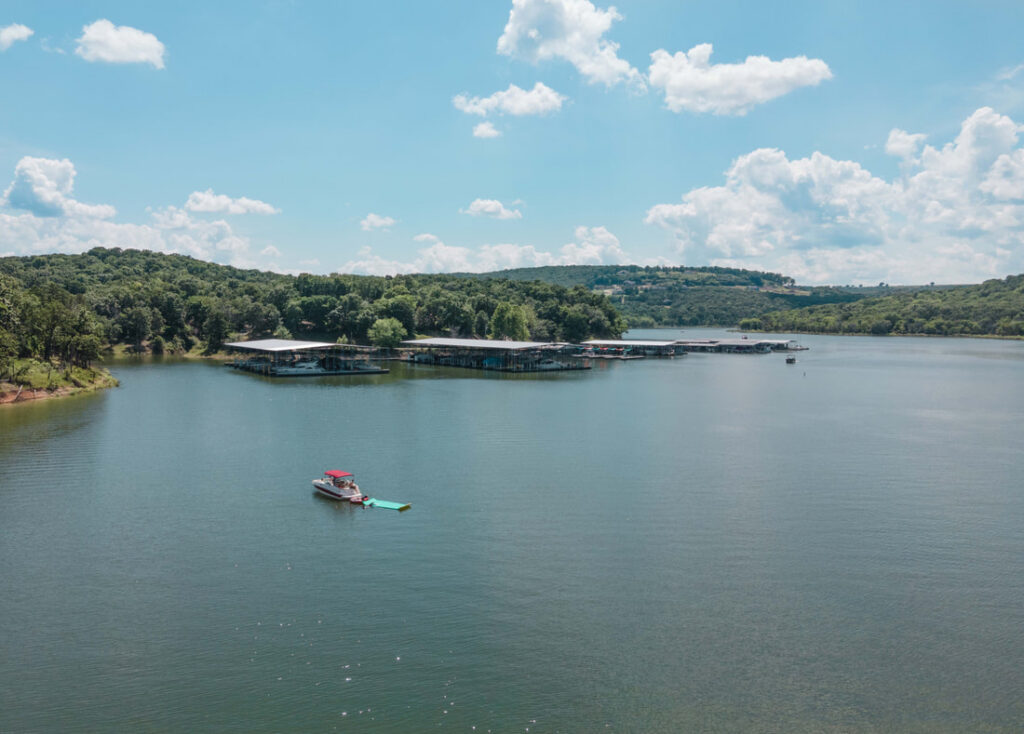
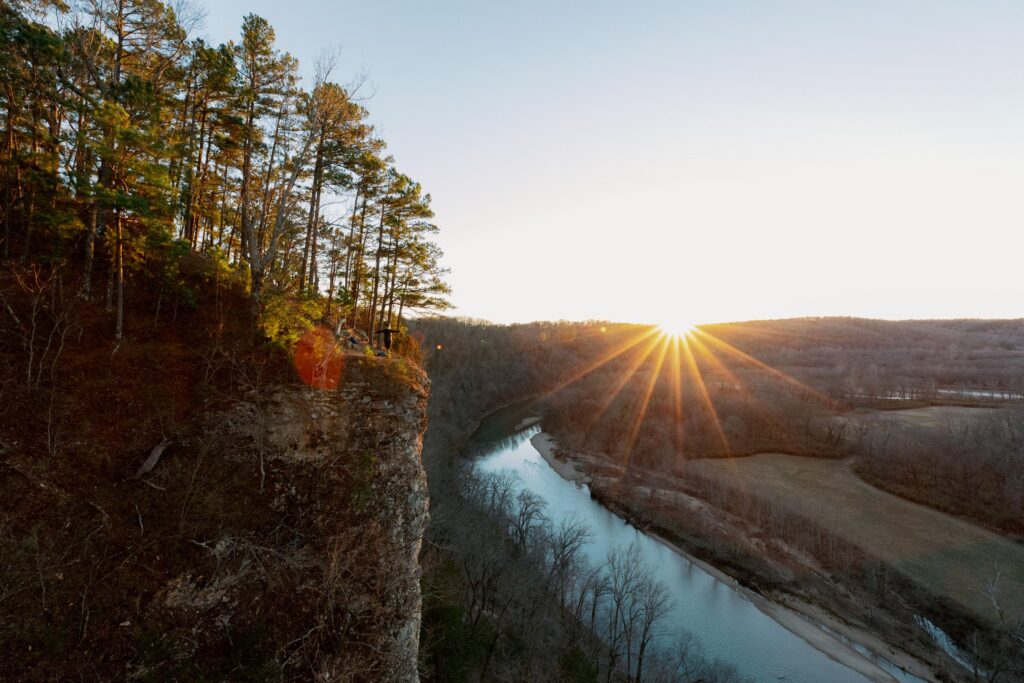
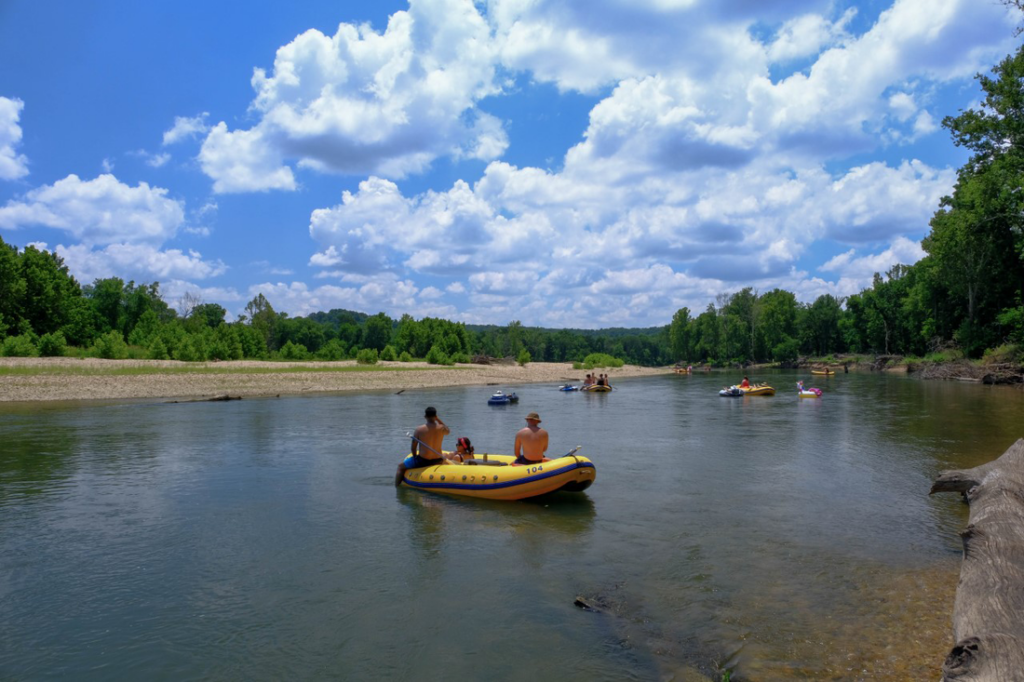
Start with a choice: would you rather spend your afternoon on a wooded trail or beside the lake? From Tahlequah, the Illinois River corridor and the drive south toward Park Hill and Lake Tenkiller give you two different ways to explore the Cherokee Hills Byway. Use the seven stops below to build your own fall outing, with time for Cherokee history, a meal and a few photographs along the way.
You do not need to fit all seven into one day. Pick the stops that match your energy, give the places with visiting hours priority, and leave room to stay longer somewhere you like.
Choose your scenic drive from Tahlequah
The Cherokee Hills Byway became a National Scenic Byway in 2009, and the National Scenic Byway Foundation lists its full length as 84 miles. These outings cover selected destinations along and near that larger route, not the entire byway.
Highway 10 along the Illinois River and Highway 82 south of Tahlequah both belong to the broader byway route. Think of Tahlequah as your base, rather than treating this as a continuous loop with seven roadside pull-offs.
| Build your outing around… | Stops to choose from | How to approach it |
|---|---|---|
| Cherokee history in town | Start here before choosing a northern or southern outing, or save the museum for another day. | |
| The river corridor and time outdoors | Choose one main walking stop. Do both only if hiking is the point of your day. | |
| Park Hill history and Lake Tenkiller | Visit the historic sites during their open hours, then make the lake your unhurried final stop. |
For navigation, use each destination’s address or the managing organization’s directions below. Save them before leaving, use designated visitor parking and skip any photo that would require stopping on a highway shoulder, blocking an entrance or crossing private property.
Begin with Cherokee history in Tahlequah
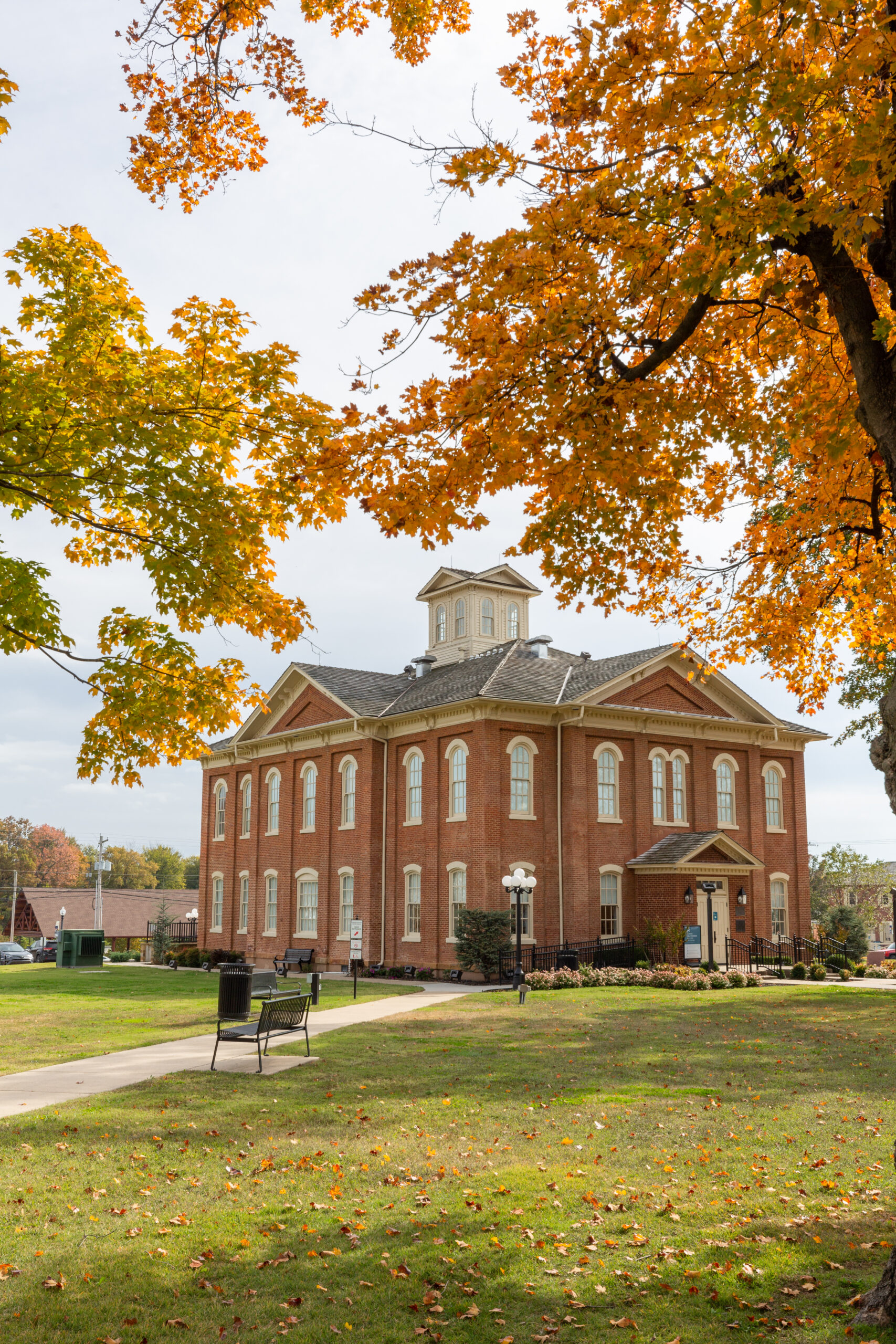
Make the history stops part of the trip, not just a way to fill time before the scenery. Start with the museum if it is open; choose the pavilion if you want a shorter outdoor stop.
Cherokee National History Museum
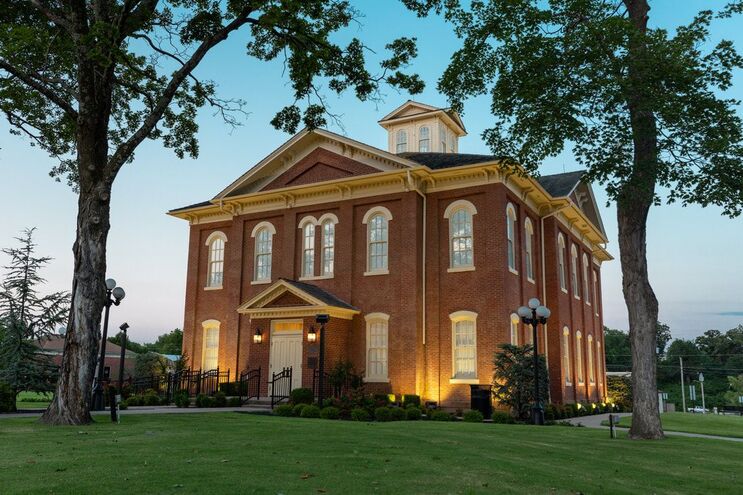
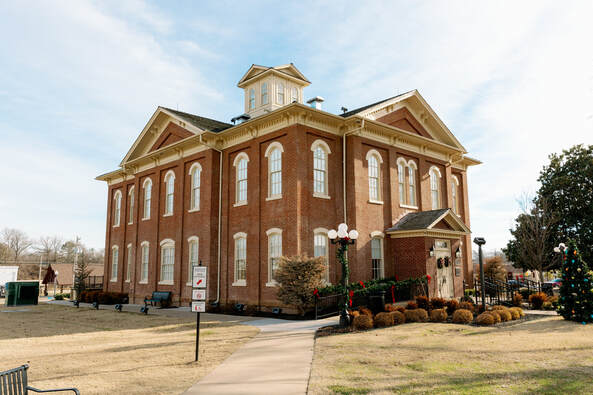
The Cherokee National History Museum occupies the historic Cherokee National Capitol at 101 S. Muskogee Avenue and presents Cherokee history and living culture, from origins and the Trail of Tears through the present day. It is a strong place to begin before visiting the Park Hill sites.
For a photograph, start outside with the building’s architecture, then put the camera away long enough to spend time with the exhibits. Ask staff about photography before taking pictures inside.
Admission is free, and the published museum hours are Tuesday through Saturday, 10 a.m. to 4 p.m.; the museum also lists wheelchair access. Check for holiday changes before making it the first stop on your route, and allow yourself more than a quick look at the front door.
Cherokee National Peace Pavilion
At 177 S. Water Avenue, the Cherokee National Peace Pavilion commemorates the 1843 Cherokee Peace Council, when representatives of more than 18 tribal nations gathered to build peaceful relationships. Its open-air design interprets the pavilion built by Cherokee Nation in the early 1840s.
Pause to read about the council before choosing your photograph. Try a composition that includes the structure and its setting rather than treating it as an anonymous backdrop.
The pavilion’s visitor information lists free admission, wheelchair accessibility and daily, round-the-clock access. It is the more flexible of these two downtown stops, though daylight is the sensible choice for this outing.
Head north for the Illinois River and woodland trails
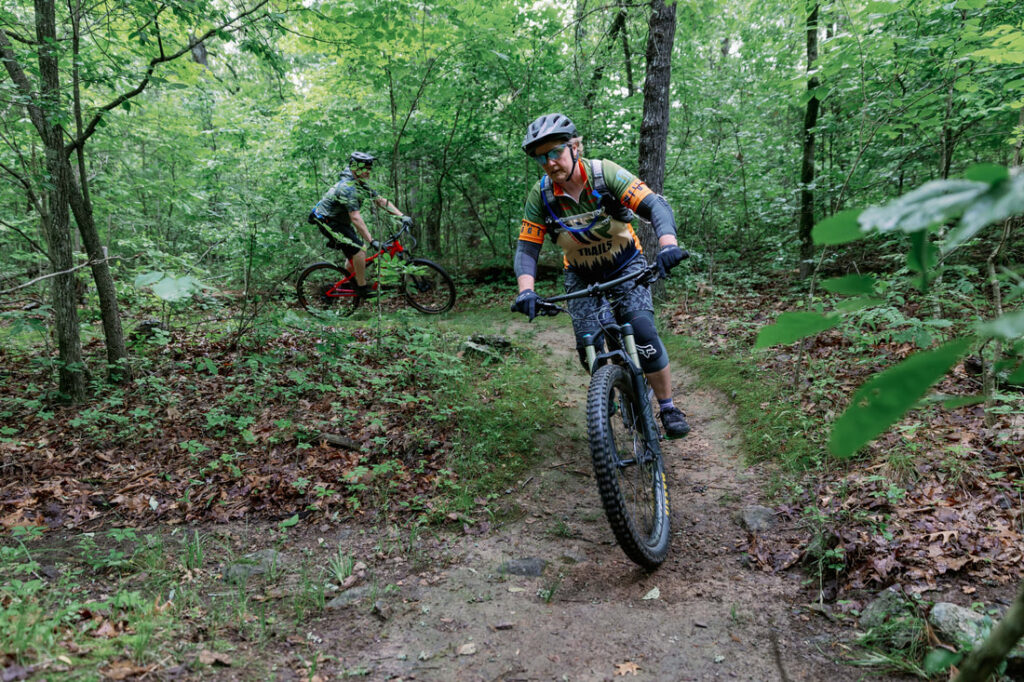
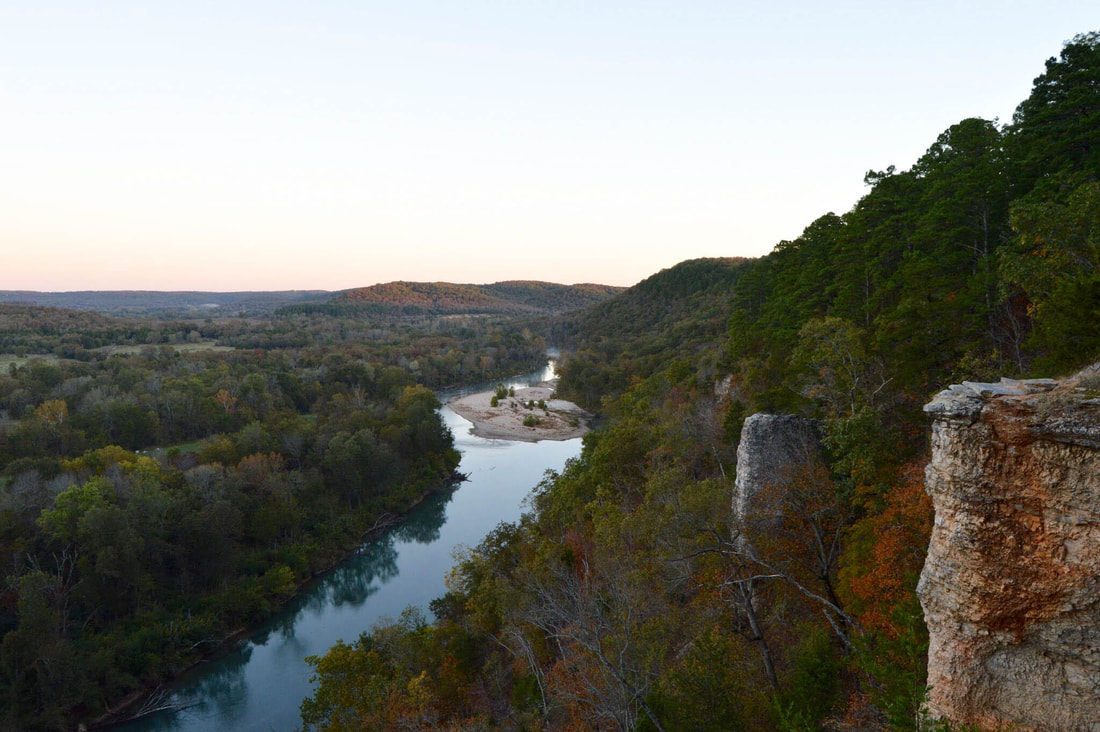
Choose this outing if you want walking to be part of the drive, not an unexpected extra. The Illinois River visitor guide is a useful starting point for the corridor’s recreation, food and lodging options.
Sparrow Hawk is the choice for a bluff-view hike; J.T. Nickel offers a choice of designated nature trails, including a shorter wetland walk (Sparrow Hawk trail guide, preserve visitor information). Neither should be mistaken for a signed roadside overlook where you simply step out of the car.
Sparrow Hawk Wildlife Management Area
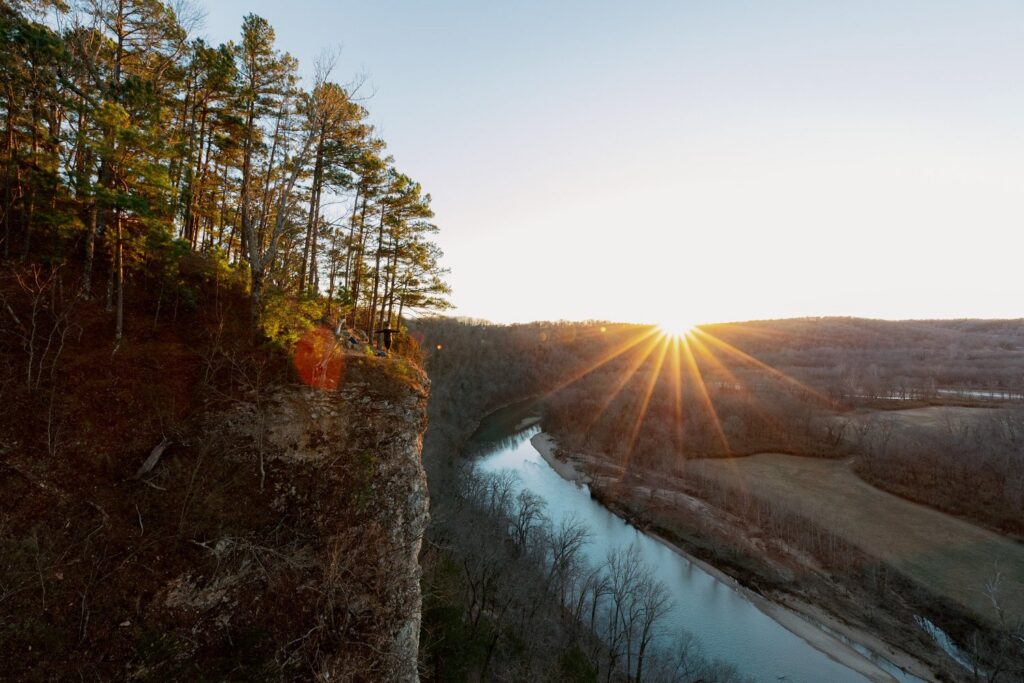
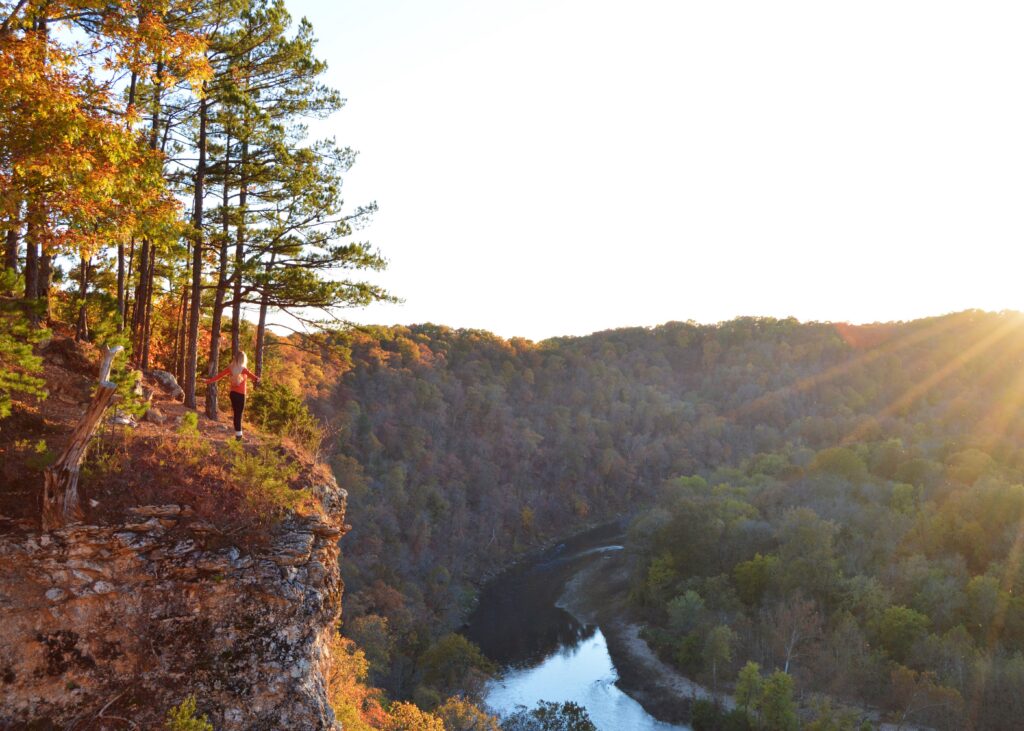
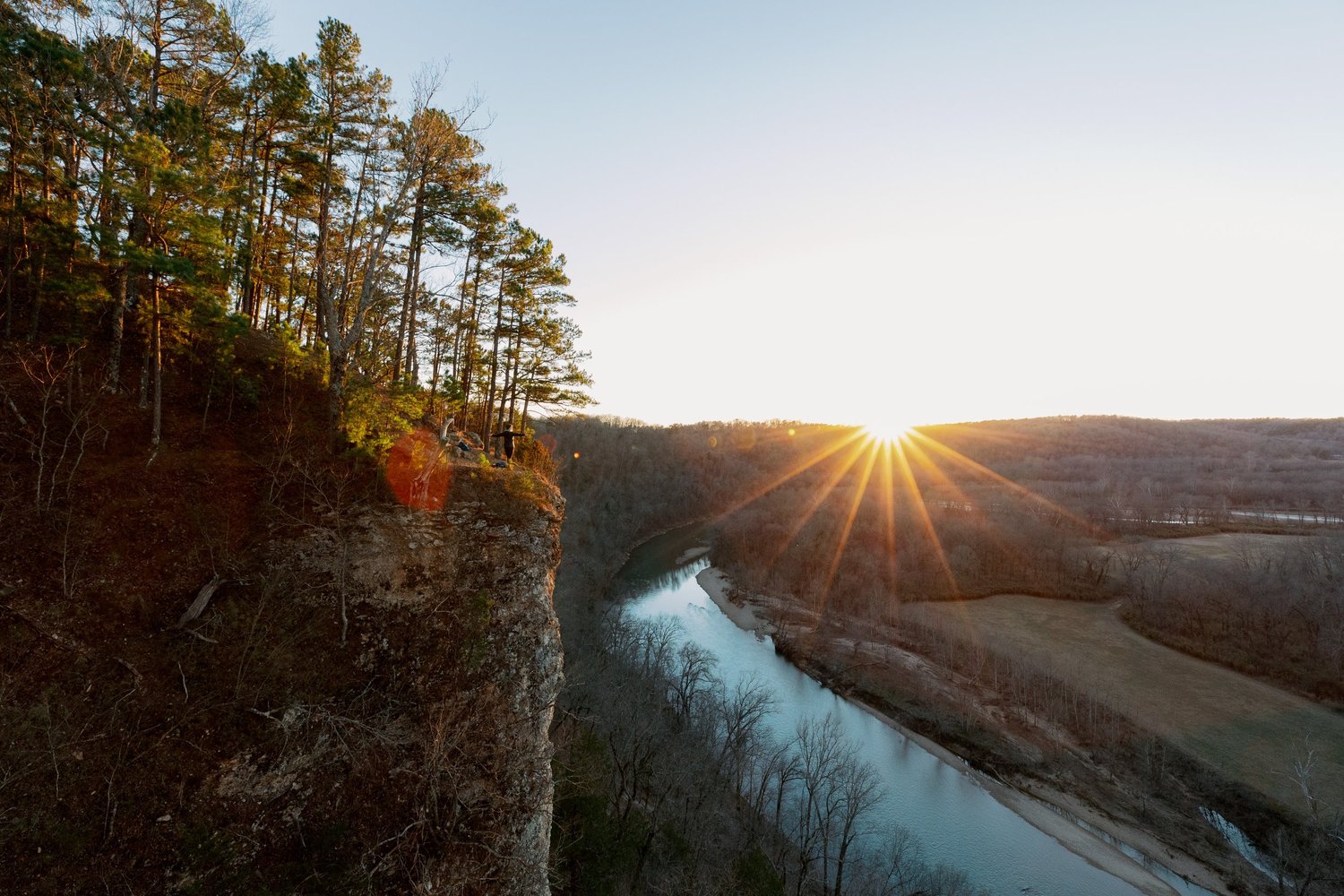
Put this stop on your list if you want to earn the view with a hike. The Sparrow Hawk trail guide describes a two-mile round trip to the viewpoint, with moderate difficulty and loose rock-and-dirt footing.
Wear shoes with traction, carry water and give the walk its own block of time. At the bluff, choose a stable place well back from the edge for your photographs; do not move closer just to remove a branch from the frame.
The trail guide’s listed location is 22581 E. 730 Road, Tahlequah. Navigate to the wildlife area’s trail access, not a similarly named lodging or float business.
Before visiting, review the Oklahoma Department of Wildlife Conservation’s Sparrowhawk page for access requirements, licensing or Wildlife Conservation Passport rules, and hunting information. Check the current rules for everyone in your party, including any nonresident check-in requirements, rather than assuming a hike is exempt.
J.T. Nickel Family Nature & Wildlife Preserve
For a different kind of photo stop, trade the single big view for a closer look at the landscape. The preserve’s designated trails include the half-mile Wetland Trail, described as having minimal topography change, and the 1.5-mile Savanna and Pine Ridge trails, which begin at headquarters.
Choose a trail before you arrive, then look for smaller compositions: the shape of a leaf, grasses against the trees, or the path ahead. Let wildlife remain a bonus rather than the reason the stop has to succeed.
Use The Nature Conservancy’s driving directions, which take you from Highway 10 across Combs Bridge and along county roads to the preserve. This is a detour from the main highway, so give it time rather than adding it as a last-minute pull-off.
The preserve is open during daylight hours, and visitors must stay on designated trails; dogs are not permitted, and Bathtub Rocks is permanently closed. Plan around the open trails, not photographs of places you may have seen in older travel posts.
Go south for Park Hill and Lake Tenkiller
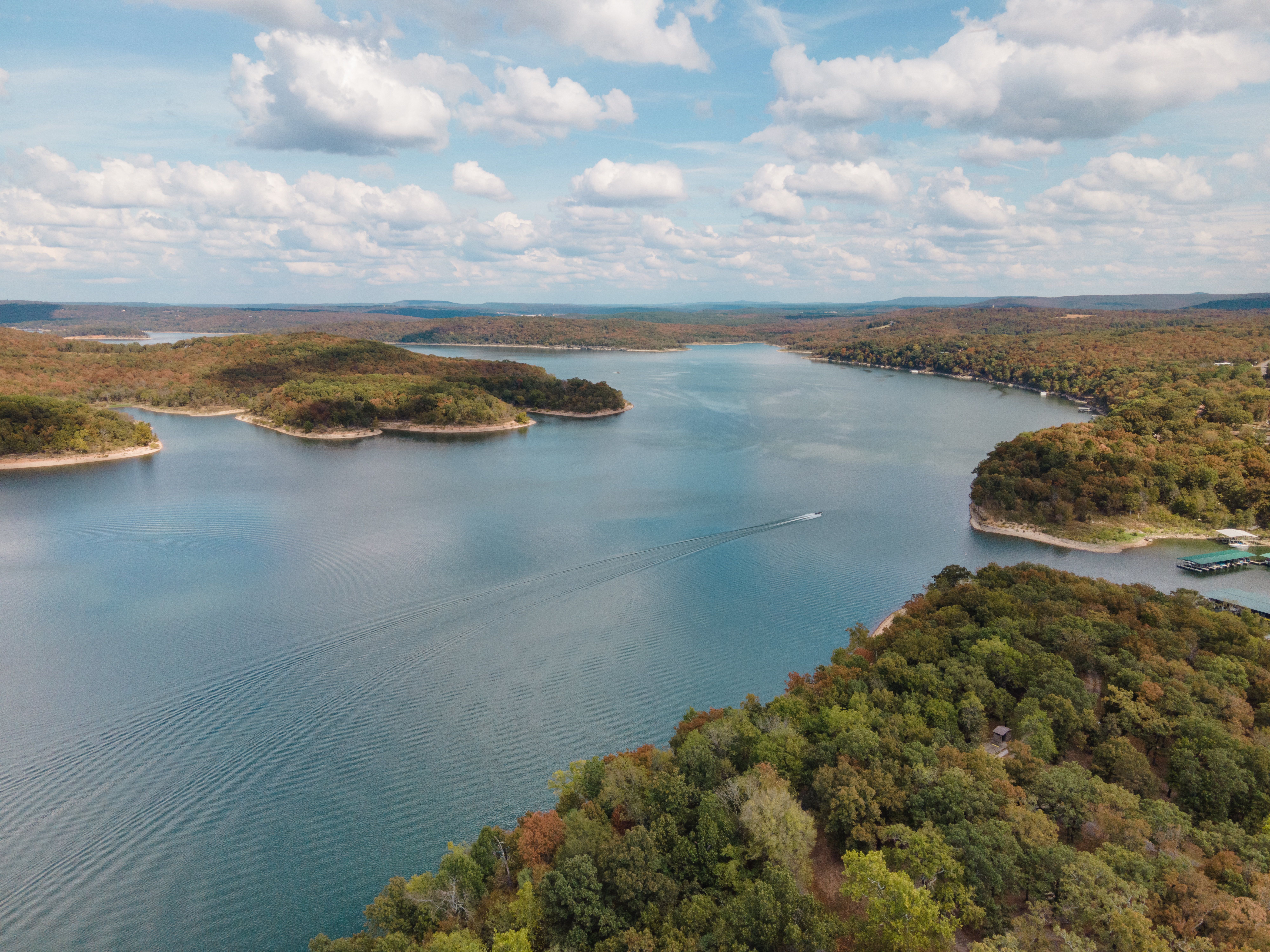
Choose this outing when you want historic-site visits followed by time beside the water. Make the Park Hill stops first so you are not arriving at a museum door at closing time.
For the lake portion, the state park’s directions from Tahlequah follow Highway 62 south to Highway 82 and then continue south to Cherokee Landing. Use the historic sites’ own addresses for the Park Hill detours instead of assuming everything sits directly on the highway.
Hunter’s Home
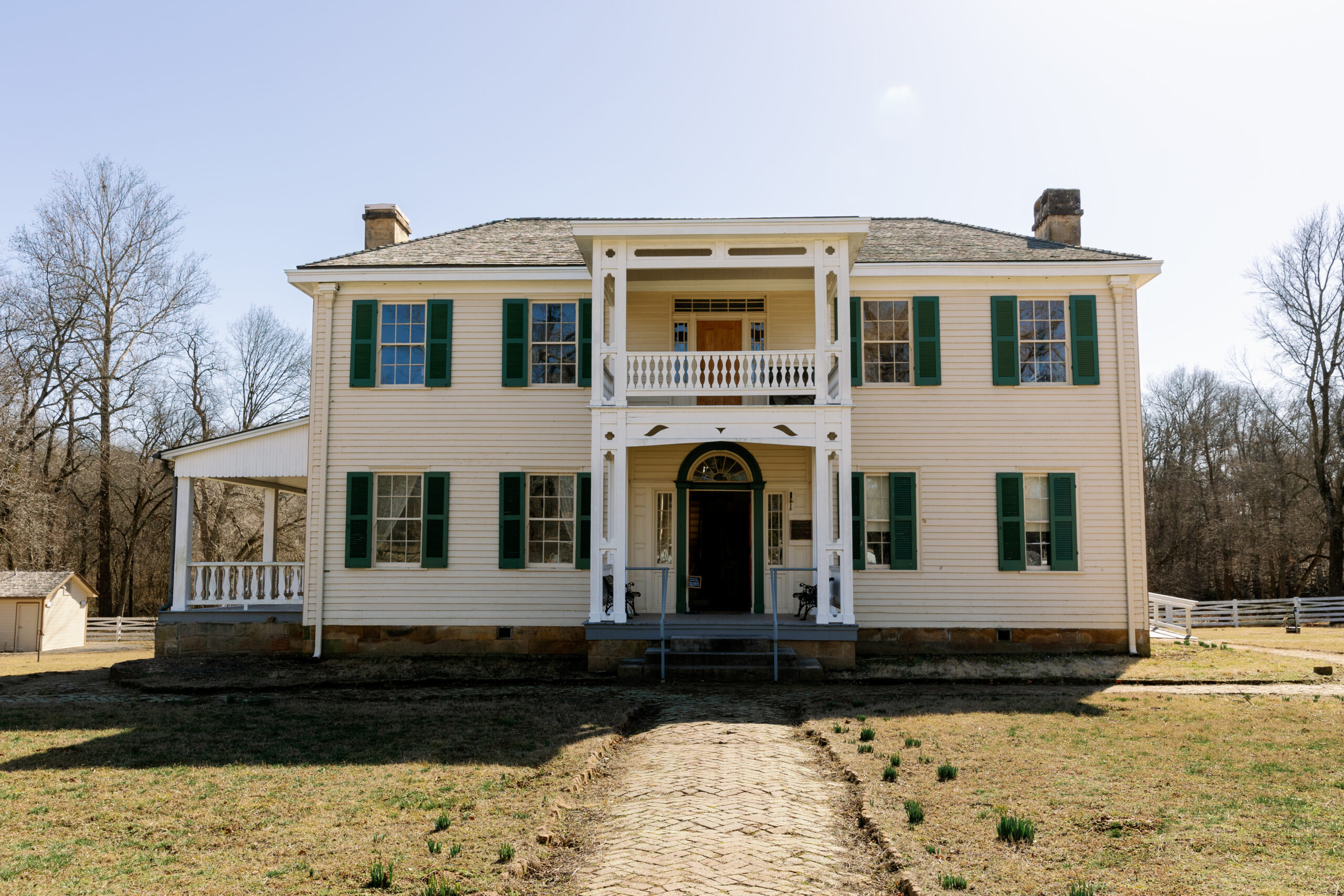
At 19479 E. Murrell Home Road, Hunter’s Home is a stop to plan around, not an anytime roadside attraction. Its published hours are Tuesday through Saturday, 9 a.m. to 4:30 p.m., and admission is charged.
The Oklahoma Historical Society identifies it as Oklahoma’s only remaining pre–Civil War plantation home, with a history that includes Cherokee removal, the Murrell family and enslaved people. Give that history your attention rather than visiting solely for a photograph of an old house.
Living-history interpretation includes nineteenth-century trades, chores, gardening and crafts, alongside the historic home and farm setting (Hunter’s Home). Ask what is happening that day and let the visit shape what you photograph.
Check the visitor information for current admission and closures; pets are not allowed, and drone use requires written approval. Ask staff about any other photography restrictions when you arrive.
John Ross Museum
Continue your history-focused outing at the John Ross Museum, 22366 S. 530 Road in Park Hill, where exhibits examine Ross’s leadership and subjects including the Trail of Tears, the Civil War and Cherokee education. The museum occupies a former rural school built in 1913.
Give yourself time to connect what you see here with the stories at the History Museum and Hunter’s Home. For photographs, consider the school building’s exterior and ask staff about photography inside.
The museum lists free admission, wheelchair accessibility and Tuesday-through-Saturday hours of 10 a.m. to 4 p.m. Pair it with Hunter’s Home on an open day, rather than saving both history stops for a Sunday drive.
Cherokee Landing State Park
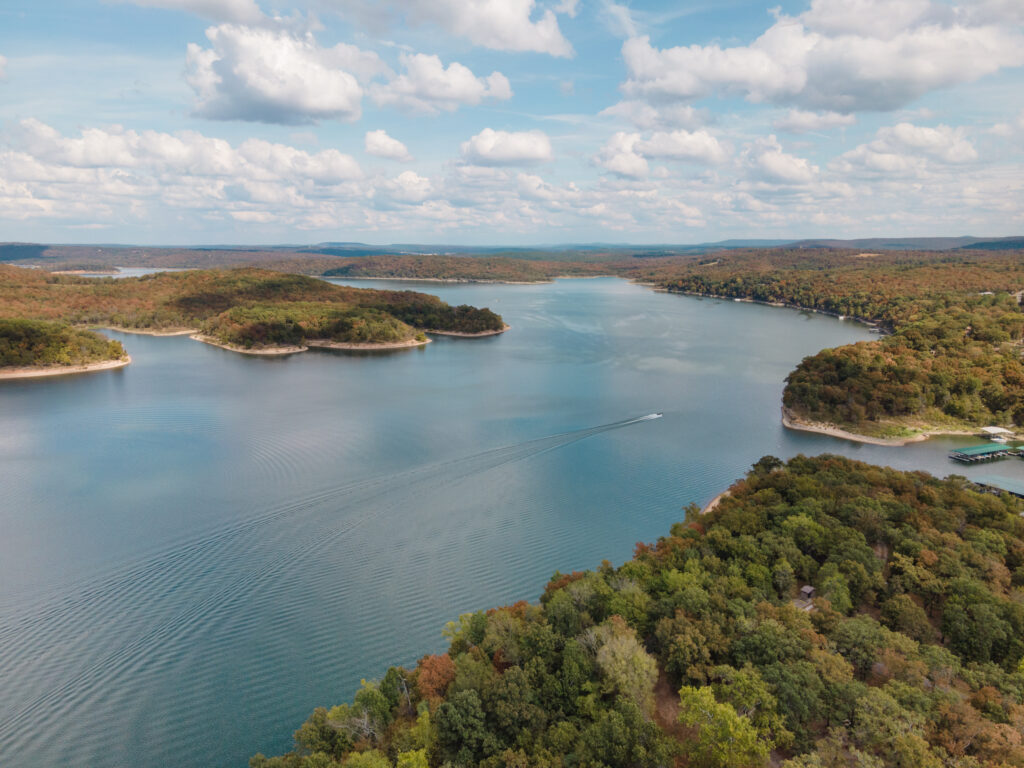
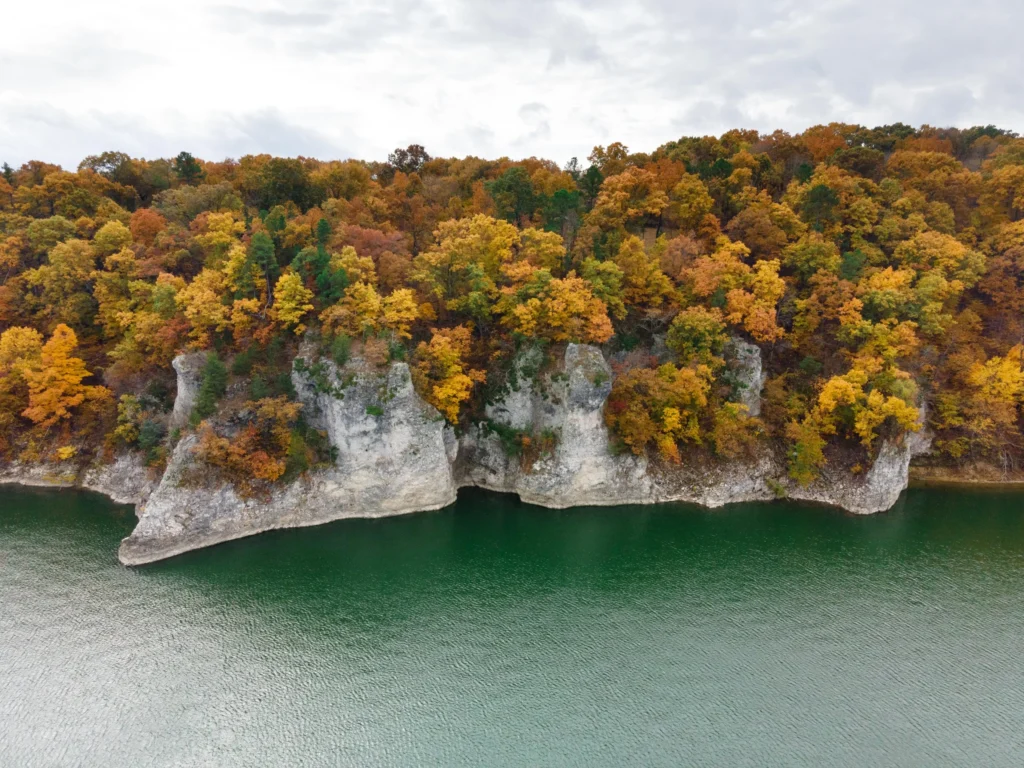
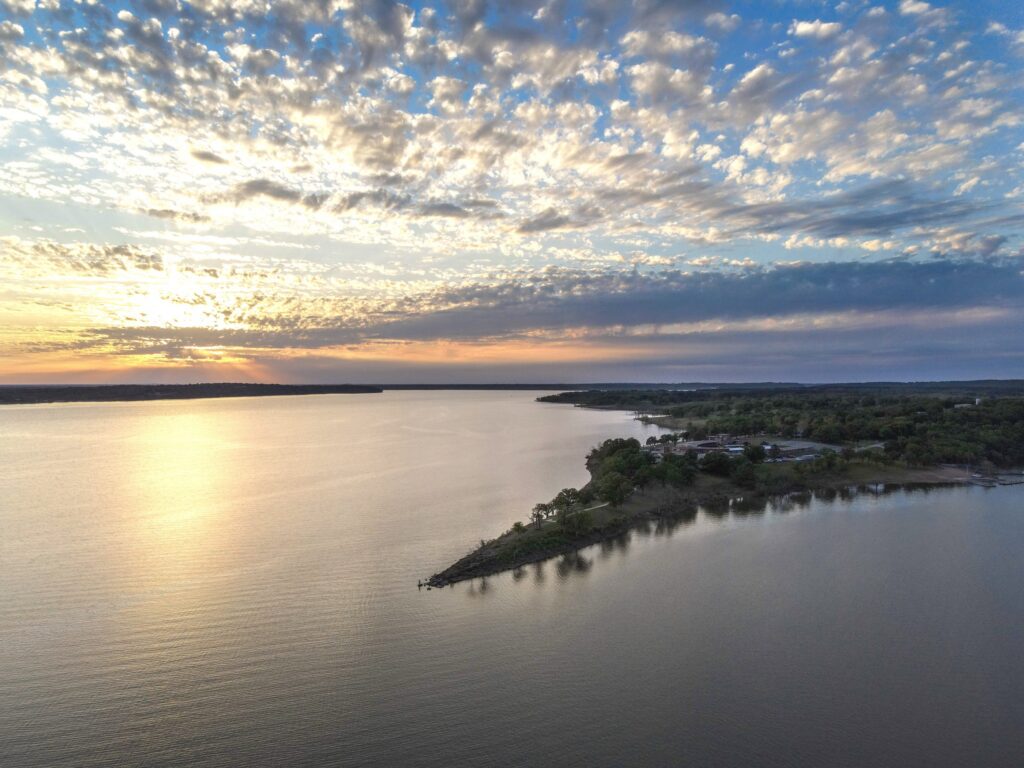
Finish with room to linger at the lake. Cherokee Landing State Park sits on a peninsula at the north end of Lake Tenkiller, with picnic facilities and lake views.
Bring a picnic, take a walk from an open day-use area and look for a composition that puts the shoreline in the foreground. You do not need an elevated overlook to make the lake part of the photograph, and you do not have to add a long hike to make this a worthwhile stop.
The park’s listed address is 28610 Park 20, Park Hill; its south end can be affected by flooding during high-water events. Check current access and day-use information before leaving, and follow signs rather than using a campsite or boat ramp as a photo spot.
If the lake becomes the focus of your trip, use the Lake Tenkiller visitor guide to explore more recreation and lodging options. For this drive, Cherokee Landing is the named destination to put into your navigation.
Plan around the stops, not a promised peak weekend
Choose a date that works for the activities you actually want to do. If the historic sites are essential, check their opening days before booking; if the walk is the point, leave enough daylight to finish without rushing.
Do not make perfect fall color a condition of enjoying the trip. Build your day around the museum, the trail or the lake first, then treat the leaves as another reason to stop and look.
Keep a rain alternative in mind and check weather, road conditions and site notices before setting out. On the drive, let passengers handle photographs and navigation while the driver concentrates on the road.
Leave time for a meal
For the northern outing, Roxie’s BBQ lists its address as 16407 Highway 10 in Tahlequah and currently serves Thursday through Sunday. Check that day’s hours before building your lunch stop around it.
For a meal back in town, browse the Eat & Drink directory, which brings together restaurants, cafés, sweet treats and other local options. Pick a place before setting out so lunch does not become an improvised search when everyone is hungry.

Stay the night and take the other road tomorrow
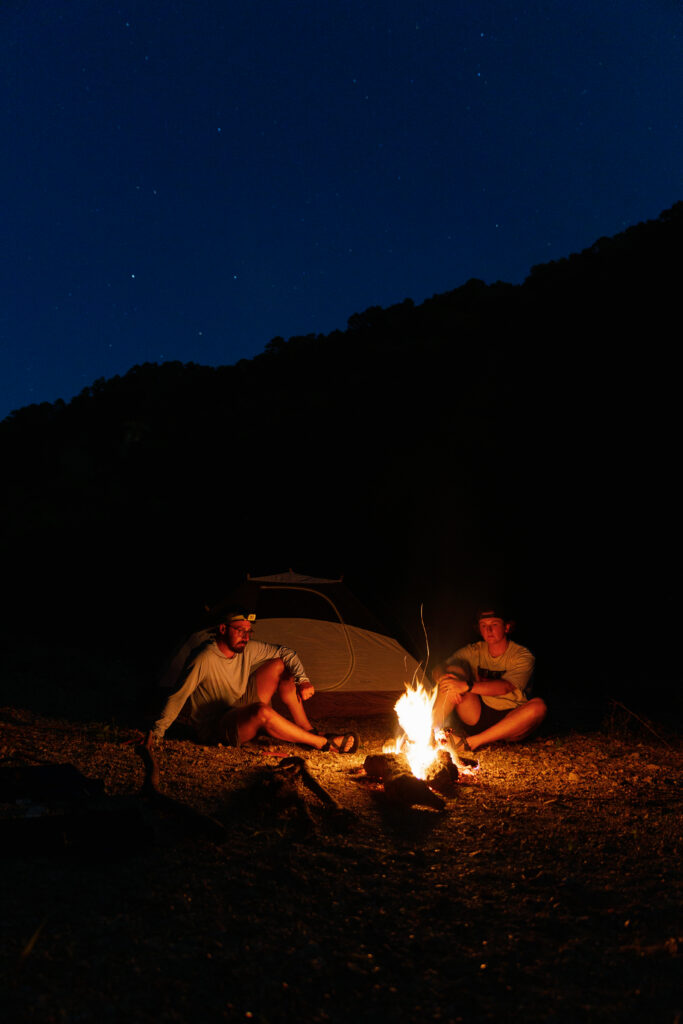
You do not have to choose between the river outing and the lake outing for the whole trip. Stay one night, give each its own day, and have dinner without watching the clock for the drive home.
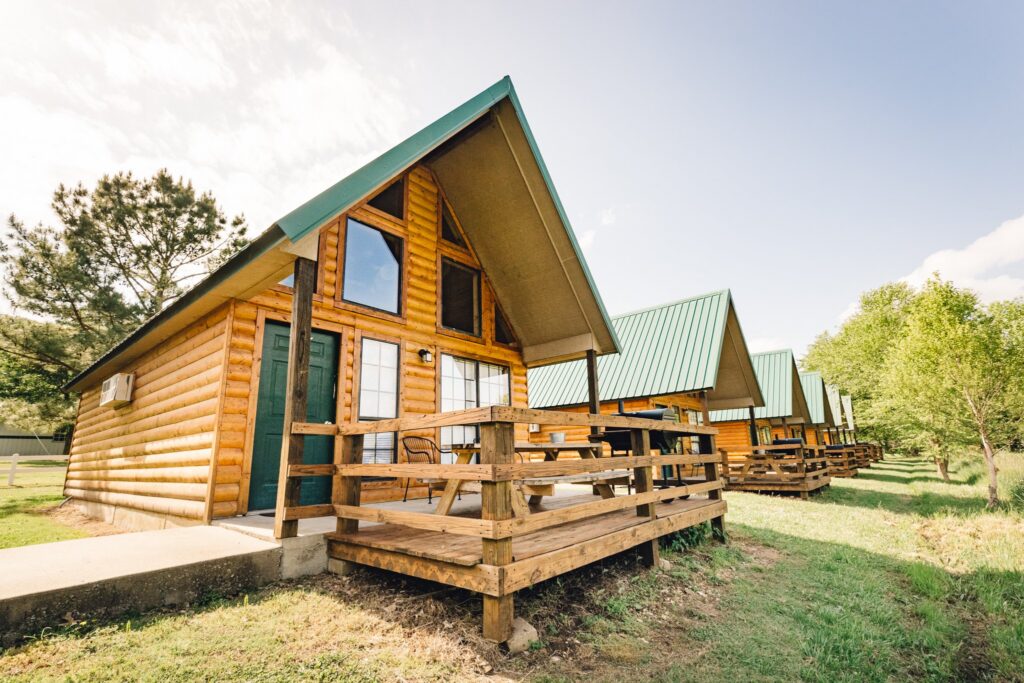
If the northern outing is your priority, start with the Illinois River cabin guide, which compares stays along the river corridor. Use it to narrow your choices, then confirm availability, minimum stays and the details that matter to your group directly with the property.
Prefer a different home base? Compare cabins and vacation rentals, or browse Where to Stay for hotels, cabins and camping options.
Questions about planning your drive
No. Choose one outing and the stops that interest you; the complete byway extends beyond these local plans, including both northern and southern segments around Tahlequah (official route).
Not as described here: Sparrow Hawk’s viewpoint involves a moderate two-mile round-trip hike, and J.T. Nickel’s outdoor visits center on designated trails (Sparrow Hawk guide, preserve information). Skip those stops if you want a lower-walking outing, and check each remaining destination’s accessibility against your needs.
Sunday can work for an outdoor-focused plan, but the History Museum, John Ross Museum and Hunter’s Home list Tuesday-through-Saturday visiting hours (History Museum, John Ross Museum, Hunter’s Home). If those are priorities, schedule them for another day and check holiday exceptions.
Explore the Award-winning Visitor Guide
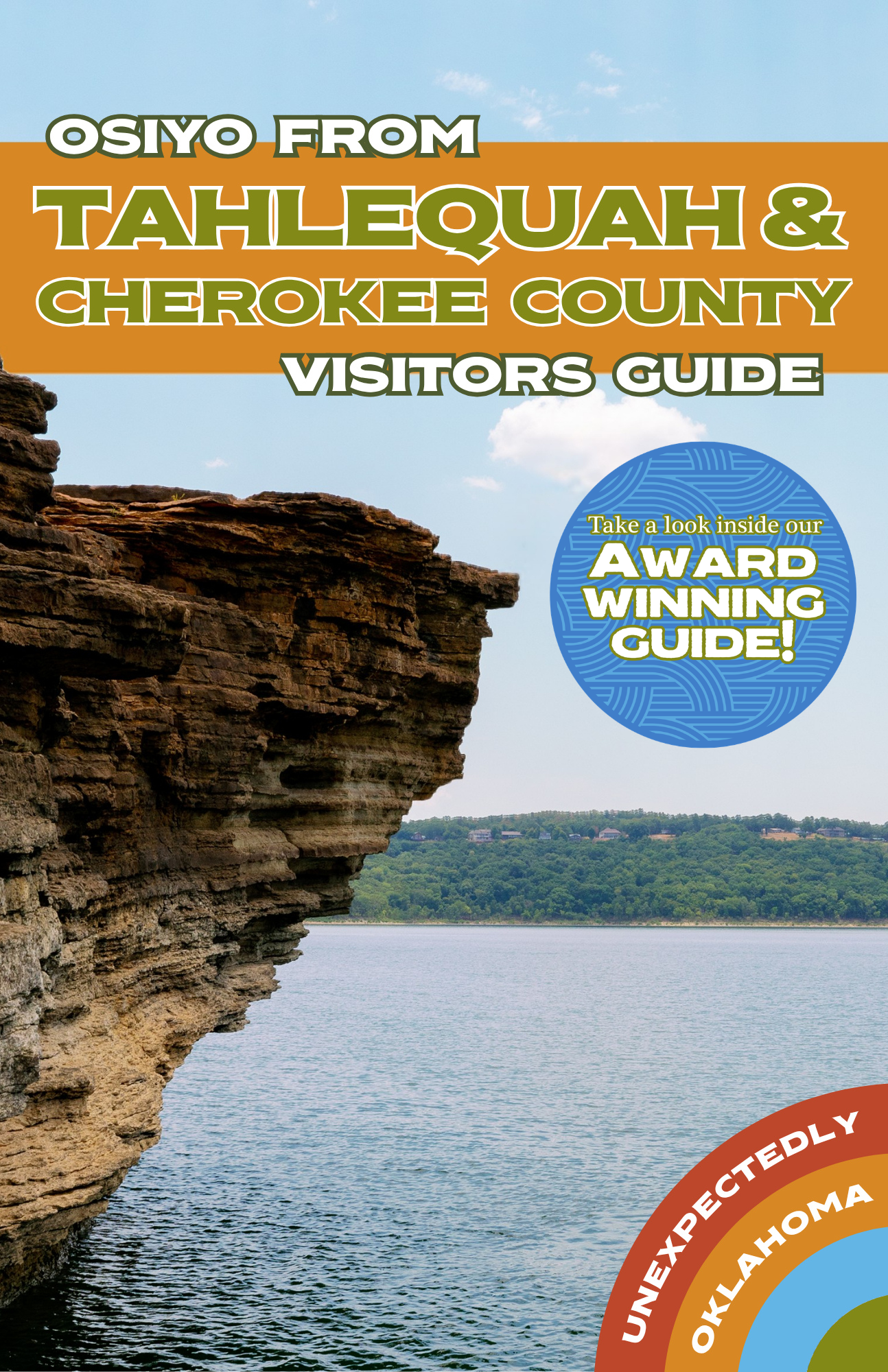
Tahlequah and Cherokee County's official Redbud Award-winning visitor guide packs three days of hikes, floats, rides, and fish into one download. Trip ideas, mileage, and outfitter contacts, ready before you leave home.